

You don't have to know what you believe before you begin. Curiosity may be the beginning.
Maybe something has started to shift. You don't necessarily have a name for it. You may not suddenly believe in everything spiritual, and you certainly haven't figured out what you believe about all of it. You're simply curious. Or perhaps curiosity isn't even the right word. Maybe something you've been taught no longer completely answers what you're experiencing.
Then you start looking, and it seems everyone else already knows the language. Someone is talking about chakras. Someone else is reading tarot. Your friend has an altar. People are discussing manifestation, meditation, astrology, ancestors, energy, shadow work, spiritual baths, crystals, divination, moon cycles and protection. One person tells you to meditate. Another tells you to learn your birth chart. Someone says you need to protect your energy. The internet has already diagnosed your spiritual awakening, identified your spirit guides and informed you that Mercury may be responsible for everything that went wrong last Tuesday.
Starting your spiritual journey can suddenly feel like enrolling in a degree program you didn't know existed. Yet underneath all of that noise is usually a much more serious question: What do I actually believe?
Not what your parents believe. Not what your church taught you to believe. Not what your friends believe. Not what someone on TikTok believes. Not even what another spiritual person insists you must believe in order to be enlightened enough, awakened enough or spiritual enough. What makes sense to you?
That question can be incredibly freeing. It can also be terrifying, because sometimes starting your spiritual journey means giving yourself permission to question things other people consider settled.
🜁 When the Answers You Were Given Are No Longer Enough
We tend to talk about a spiritual journey as though something dramatic has to happen first: a profound awakening, a supernatural experience, a devastating life event, some unmistakable moment when the universe announces that it has selected you for something. Sometimes that happens. But sometimes you have experiences you cannot explain within the framework you've been given. Sometimes you possess gifts you don't understand. Sometimes you begin noticing contradictions in something you've been taught. Sometimes you read a sacred text and find yourself wondering about what isn't there as much as what is. Sometimes you encounter another tradition, another history or another way of understanding the world and realize the story may be considerably larger than the version you inherited.
That realization tends to produce questions. Is there more to life than what I can see? Why am I drawn to this? What did my ancestors believe? What existed before the religion I was raised in? Why does this particular practice resonate with me? Do I believe energy affects us? What happens when we die? Why have human beings across cultures developed spiritual practices at all? What was lost, changed, translated, suppressed or simply left out as beliefs traveled through history?
Questions like these can take you places. They can lead into history, religion, anthropology, philosophy, ancestral traditions, mythology, science and spiritual practice. One answer creates another question. Something you learn suddenly provides context for something you've wondered about for years. Pieces that once appeared completely unrelated begin to sit beside one another differently.
This is why curiosity isn't spiritual ignorance. It can be the beginning of spiritual education.
You don't have to arrive with answers. You are allowed to investigate. You are allowed to encounter an idea and think, I don't know about that. You are allowed to try something and decide it isn't for you. You are allowed to discover that something you were warned against isn't what you were told it was. You are equally allowed to research something that fascinates you and ultimately decide that you don't believe it.
Discernment works in both directions.
The difficulty is that spirituality rarely develops in a vacuum. Other people have opinions, and often very strong ones. Depending on where you come from, questioning certain beliefs may be treated as dangerous. Practices outside your family's religion may be described as evil. Curiosity itself can be treated as disobedience. Someone may tell you that an experience you know you had could not have happened, that a gift you have experienced throughout your life is something you should fear, or that asking certain questions means you've already wandered too far.
Then you enter spiritual communities and discover something interesting: they have opinions too.
One person insists you have to believe this. Another tells you never to do that. Someone has decided their spiritual path is the path. Another person has an elaborate list of signs proving you've awakened properly. It is entirely possible to leave one system of certainty only to walk directly into another.
At some point, spiritual exploration requires you to develop the confidence to listen, learn, investigate and then make a judgment call for yourself. That doesn't mean assuming every belief is equally true or deciding research no longer matters. Quite the opposite. If you're going to form your own opinions, you need enough information to form them responsibly.
Read beyond the social-media caption. Find out where something came from. Learn its history. Compare perspectives. Understand that sacred texts have histories too—written, compiled, translated, interpreted and debated across centuries. Learn about the cultures behind practices you're interested in. Understand the difference between participating respectfully in something and simply taking it because it appeals to you.
Education doesn't diminish spirituality. It can deepen it. You're no longer believing something solely because another person told you to. You're beginning to understand why you believe it.
🜃 Finding Where You Fit
Perhaps this is why the pressure to immediately decide what you are can be so counterproductive. There is nothing wrong with finding a spiritual or religious tradition that feels like home. Traditions can provide community, history, language, structure and connection to generations of practice. But you don't need to claim an identity before you've given yourself time to understand it.
At the beginning, a better question than What am I? may simply be What am I learning?
Your spiritual journey can be a period of gathering pieces. You learn something about your ancestry and one piece clicks into place. You study a spiritual practice and another connects. Something from childhood suddenly makes sense through a completely different lens. A gift you've had for years finally has language. A belief you once accepted begins to look different after you've learned its history. Something you were told to fear becomes something you understand.
Slowly, you begin seeing where you fit inside the puzzle.

That process doesn't require rejecting everything you were taught. You may keep much of it. You may understand some of it more deeply. You may let certain pieces go. You may discover that beliefs you once thought contradicted each other actually answer different questions for you. The point isn't rebellion for the sake of rebellion. The point is consciousness. You are deciding what gets to become part of you.
And you don't need to buy your way through that process.
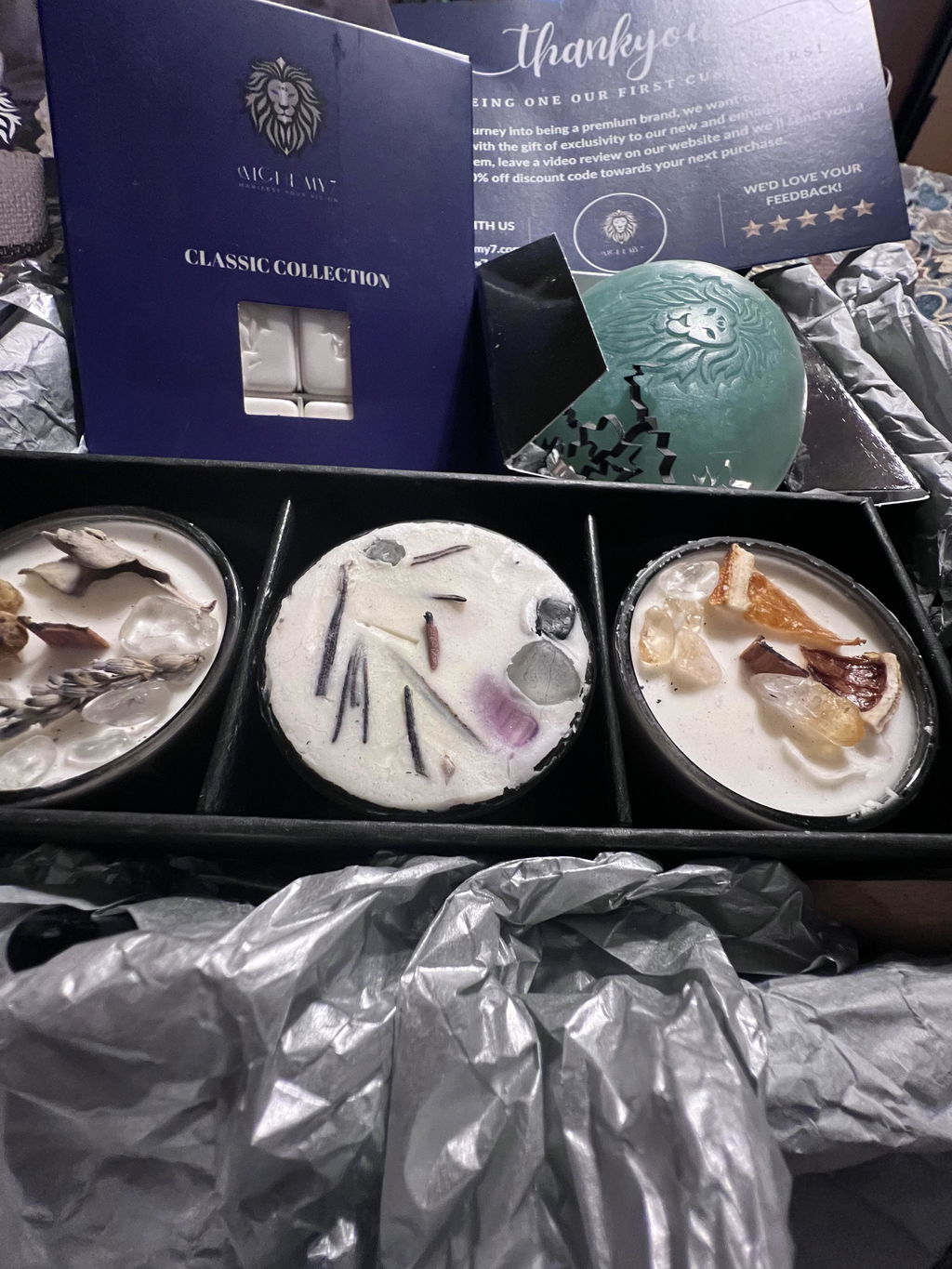
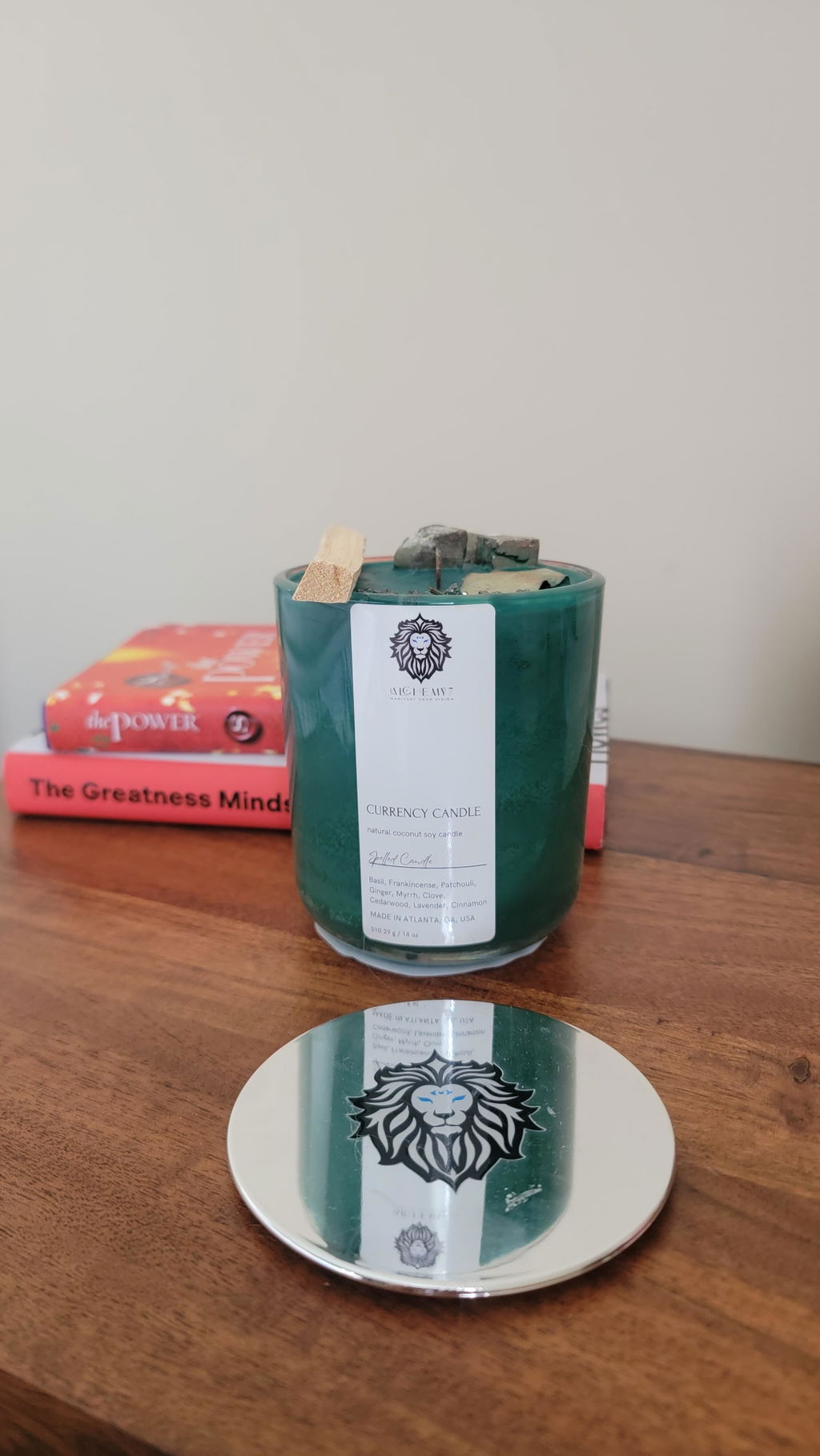
This might be an unusual thing for the founder of a spiritual lifestyle company to tell you, but a candle doesn't make you spiritual. Neither does a crystal, a sage stick, a tarot deck, an altar cloth or a bottle of Florida Water. These are tools. They can help give intention form and become part of practices that help us focus, cleanse, remember, honor, release, protect or prepare. But the tool is not the practice, and the practice is not the belief.
If you are beginning your spiritual journey, pay attention to what genuinely draws you before deciding what you're supposed to own. Maybe meditation makes sense to you. Maybe working with your ancestors feels familiar in a way you cannot immediately explain. Maybe astrology fascinates you. Perhaps you're interested in divination, energy work, prayer, manifestation, herbs, moon cycles or spiritual cleansing. Follow the curiosity before you follow the shopping list. Then, when a spiritual tool enters your practice, you understand why you're reaching for it.
That matters at Haus Of Alchemy. I don't want you purchasing something simply because someone convinced you spiritual people are supposed to own it. I would rather you understand what you're trying to do, learn about the tools associated with that practice and make an informed choice about whether one belongs in yours. There is a difference between collecting spiritual objects and developing a spiritual practice.
Eventually, though, exploration has to move beyond reading about what everybody else believes. You have to experience something for yourself. Maybe you meditate consistently and notice what happens when you become quiet. Maybe you begin tracking the moon and realize you're more interested in natural cycles than you expected. Maybe you create a space to honor your ancestors, cleanse your home intentionally, journal your dreams or learn one divination system slowly instead of buying five decks and understanding none of them.
The particular practice matters less at the beginning than your relationship with it. Does it deepen your understanding of yourself? Does it challenge you? Does it create connection? Does it help you become more present? Does it encourage action in your actual life, or are you beginning to use spirituality to avoid the things in your life that require action?
That distinction matters because spirituality can become another way to hide. We can ask the universe for signs instead of making decisions, manifest instead of planning, perform cleansing rituals while continuing to invite the same destructive people back into our lives, or talk endlessly about protecting our energy while refusing to establish a boundary. A spiritual practice should not make you less willing to participate in your own life. It should make you more conscious of how you are participating.
Your practice should also be allowed to change as you do. Something you once believed may stop making sense. A practice you initially loved may no longer serve you. You may discover a tradition that gives language to something you've felt for years or return to something from childhood with an entirely different understanding of it. There is no prize for constructing a spiritual identity at twenty-five and refusing to reconsider it at forty-five.
Your spiritual journey belongs to a living person. It should be allowed to live too.

🜔 As for Me
For me, spirituality began because there were things about myself and the world I needed explained. I had gifts. I experienced things that were real to me, but I needed language for them. I needed to understand what they were, where they fit and what they meant.
At the same time, I had questions about the Bible and the religious framework I had been given. As I read, there were places where, to me, pieces seemed to be missing. I could have ignored those questions because questioning what you've been taught can be uncomfortable. Instead, I went looking.
I learned. I read. I researched. I explored history, traditions and beliefs beyond what I had originally been taught. I began finding pieces that aligned with experiences I'd already had and questions I'd already been asking. One piece connected to another, then another, until things that once seemed separate began forming a much larger picture. Eventually, I began seeing where I fit inside the puzzle.
That journey wasn't always comfortable because I also had to navigate other people's fear and opinions. There were people who believed certain things were evil because those things didn't align with what they believed. There were things I was expected not to question. Eventually, I had to decide whether someone else's certainty was going to determine the boundaries of my understanding.
I chose to make that judgment for myself. I chose education and investigation. I chose to form my own opinions.
I would not trade what that decision opened for me. My spiritual journey introduced me to an entirely different world of history, possibilities, traditions and ways of understanding humanity and our past. It brought me closer to answers I had spent years trying to find while giving me the freedom to continue asking questions when an answer still didn't feel complete.
That experience is part of what I want Haus Of Alchemy to offer other people. Not another voice standing over you telling you exactly what you're required to believe, but a place where you can explore. You may arrive deeply spiritual. You may arrive religious and spiritually curious. You may be questioning what you were raised to believe. You may have gifts you don't understand. You may simply suspect there is more to the world than you've been taught and want somewhere to begin looking.
Here, you are allowed to learn, question, investigate and decide. You are allowed to encounter something and determine it isn't for you, just as you are allowed to discover something that changes the way you understand yourself. Without judgment, shame or fear.
Because many people beginning a spiritual journey aren't looking for another person to hand them a belief system. They're trying to navigate everyone else's opinions long enough to hear their own.
Your spiritual journey doesn't begin when someone finally tells you what to believe. It begins when you give yourself permission to find out for yourself.
— Ameynra J. Alquemi
Founder, Haus Of Alchemy
Manifest your vision.