


Why do we reach for a candle when we want something to change?
When someone we love is sick, we light a candle and pray for them. When someone dies, we light one in their memory. We walk into churches, light candles and ask for help. At vigils, entire communities stand surrounded by them while hoping for an outcome they cannot control. Sometimes we write down what we want. Sometimes we say it aloud. Sometimes the request never leaves our thoughts.
And have you ever blown out your birthday candles?
Most of us have been doing it since we were children. Someone brings out the cake, everybody sings, the candles are burning and you already know what comes next. Close your eyes. Make a wish. Don't tell anybody what you wished for or it won't come true. Then blow out the candles and hope you get what you asked for.
It's such an ordinary part of celebrating a birthday that we don't think twice about it.
But think about it now.
You deliberately lit a candle, attached something you wanted to it and expected—or at least hoped for—an outcome.
Sounds a little like candle magick, doesn't it?
🜂 So What Is Candle Magick?
Candle magick is actually quite simple at its foundation. A candle is chosen for a purpose, that purpose is established through intention, prayer, petition or spiritual work, and the candle is lit as part of working toward the desired outcome. Depending on the practitioner and tradition, the candle may be used exactly as it is or prepared with oils, botanicals, written petitions, symbols or other elements that support the work.
But none of those additions are what make the candle magick.
The intention does.
That's part of what makes candles so interesting. We take something we cannot physically touch—a desire, a hope, a request for healing, a need for protection—and give it somewhere to exist outside of ourselves. The candle becomes something we can prepare, light and return to. What was once only a thought now has a physical place in our spiritual practice.
Perhaps that's why candles have found their way into so many different traditions. We use them when we pray, when we mourn, when we celebrate and when we hope. The beliefs surrounding those moments can be completely different, but the instinct is remarkably familiar. When something matters to us, we often want to do more than think about it. We want to mark the moment somehow. We want to participate.
Candle magick takes that instinct and works with it deliberately.
There is also something powerful about having to decide what you're actually asking for. It is easy to say that you want your life to change. Preparing a candle asks a more interesting question: What do you want to change?
You may begin thinking you need a candle for money and realize what you actually need is opportunity. You may think you want love and discover that what you're really asking for is reconciliation—or release. Protection may mean strengthening what surrounds you, but it might also mean finally removing yourself from what keeps hurting you.

The candle doesn't make those decisions for you. It makes you confront them.
And once you've decided, lighting it creates a moment of commitment. There is a before and an after. Before, there was something you wanted. Now you have chosen to engage with it.
That is where I believe much of the power of candle magick lives.
Not in pretending a candle will do all the work for us, but in taking something invisible and giving ourselves a way to actively participate in it.
🜁 Maybe We've Been Doing This Longer Than We Think
Once you look at candle magick that way, some of our most familiar traditions begin to look a little different.
Two people can be worried about someone they love. They both light a candle and pray for healing. Their beliefs about what happens spiritually may be completely different, but the act itself is remarkably similar. Both have a desired outcome. Both deliberately chose a candle. Both connected that candle to a spiritual request.
One may call it prayer. Another may call it candle magick.
And yes, I think both are practicing a form of candle magick.
That doesn't mean their religions are secretly the same or that they understand the spiritual world in the same way. Of course they don't. What it means is that candle magick is larger than the imagery we have attached to the word magick. At its most basic, it is the practice of deliberately using a candle in connection with spiritual intention and a desired outcome.
Which brings us back to that birthday cake.
Nobody has to teach a five-year-old a correspondence chart. We simply teach them that the candle and the wish belong together. Close your eyes. Think about what you want. Blow out the flame. Believe, just for a moment, that something might happen because you did.
We don't find that frightening.
We find it charming.
And that's where things start to get a little more complicated.
🜂 When Does the Candle Become Demonic?
If lighting a candle while hoping for an outcome is perfectly ordinary in one setting, what changes when someone does it as part of candle magick?
Certainly the belief system can change. The person may prepare the candle differently or understand spiritual power differently. But does difference automatically make the practice dangerous?
That's the question I find more interesting.
Because many people who would never hesitate to light a candle and pray for healing become uncomfortable when someone from another spiritual tradition says she is lighting a candle for exactly the same thing. The first candle is understood as sacred. The second may be called superstition, witchcraft or even demonic.
But they're both holding candles.
They're both asking for healing.
So what exactly made one acceptable and the other something to fear?

Perhaps the answer has less to do with candles than with who has historically been allowed to define what counts as legitimate spiritual practice.
Christianity has brought faith, meaning and community into the lives of people around the world. It also has a history intertwined with colonization and missionary expansion. In many places, people already had religions and spiritual practices long before Christianity arrived. Yet their beliefs were sometimes treated not simply as different, but as inferior, primitive or spiritually dangerous—something to be replaced rather than understood.
Colonization doesn't only concern land. It can also establish whose way of seeing the world becomes the standard everyone else is expected to follow.
We understand this instinct easily when it comes to language. Imagine deciding that because English is the language you speak, everyone else should speak English too. Spanish, French, Yoruba, Arabic or Mandarin aren't incorrect because they aren't English. They are different languages used by people who understand the world through different histories and cultures.
Spiritual language can work much the same way.
Prayer may be your language. Candle magick may be mine.
You are free to believe that your religion explains the spiritual world correctly. Spiritual freedom has to include that. But it also has to leave room for another person to say, I understand the spiritual world differently.
The problem begins when this is what I believe becomes therefore this is what everyone else should be required to believe.
That's an old idea wearing modern clothes.
And candles expose the contradiction beautifully because they're so ordinary. The church candle feels sacred because we recognize the setting. The birthday candle feels harmless because we recognize the tradition. The memorial candle feels meaningful because we understand the grief behind it.
Then someone calls her practice candle magick, and suddenly we start looking suspiciously at the wax.
Maybe the wax was never the problem.
Maybe we're reacting to the person holding it.
That doesn't mean everyone has to accept candle magick as part of their own spiritual practice. You don't. You don't even have to believe it works. But there is a meaningful difference between saying, I don't believe what you believe, and deciding that someone else's spiritual practice must therefore be corrupt.
Sometimes respecting another person's spiritual freedom is as simple as allowing their candle to mean something different from yours.
🜔 As for Me
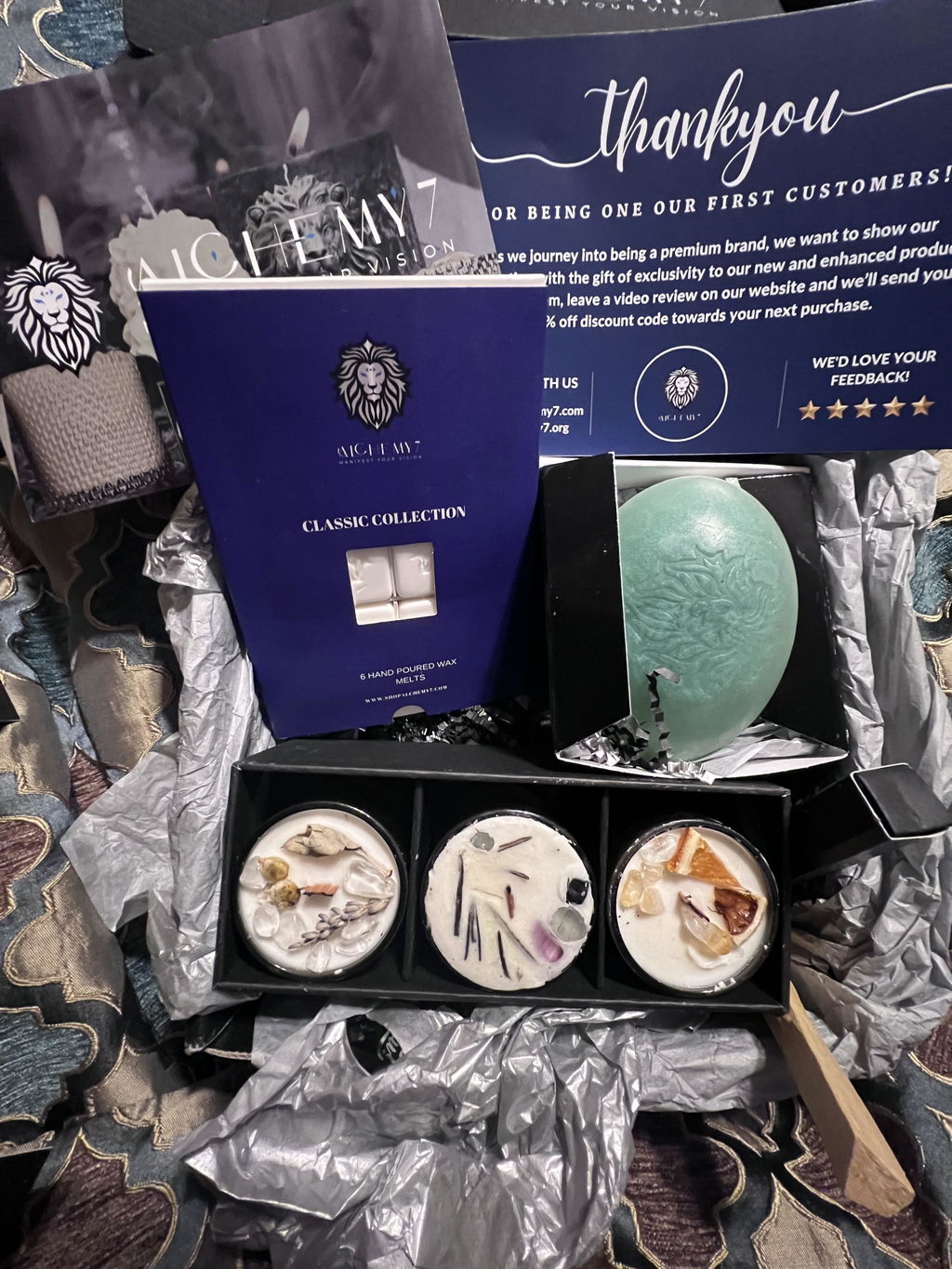
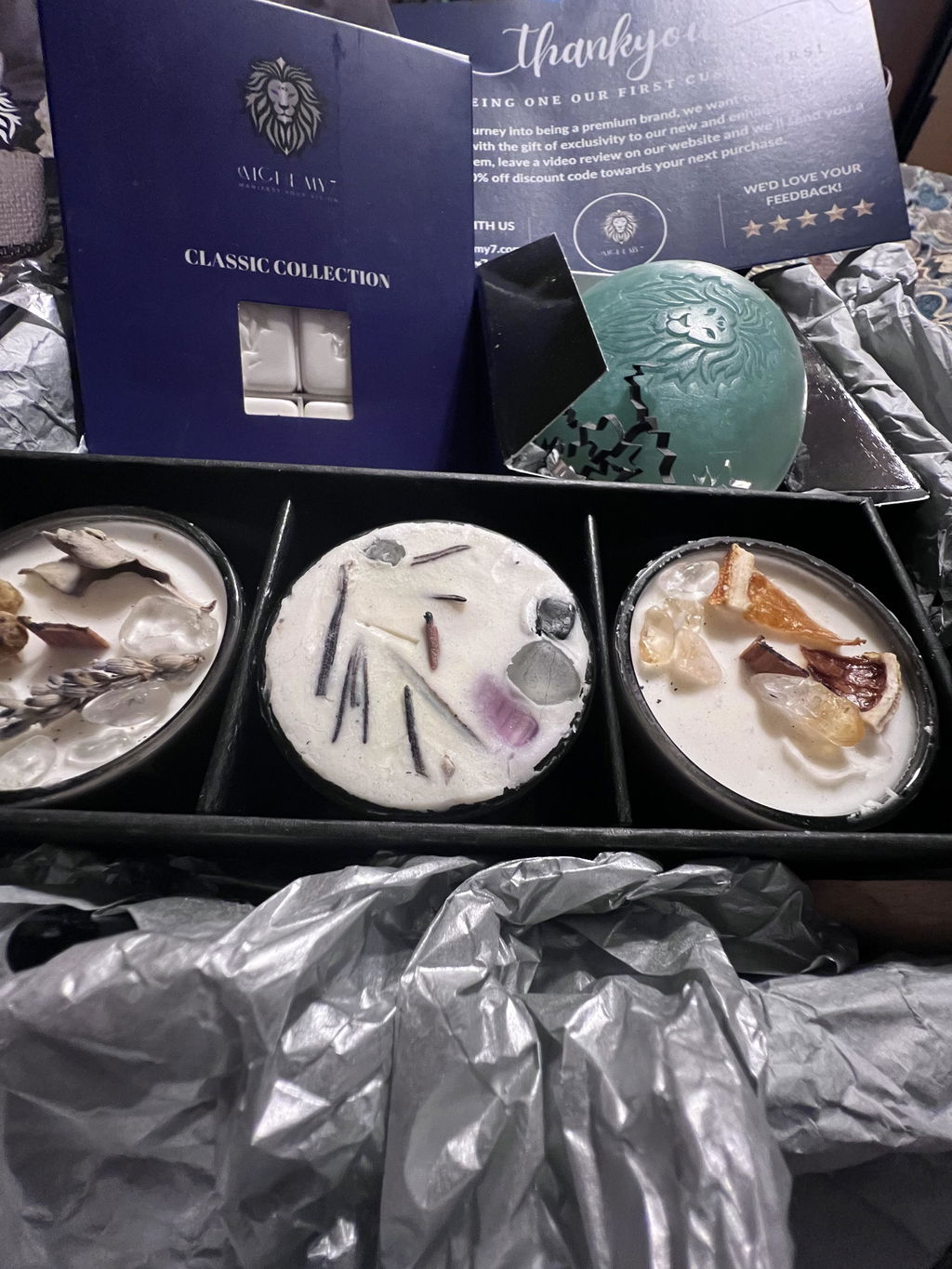
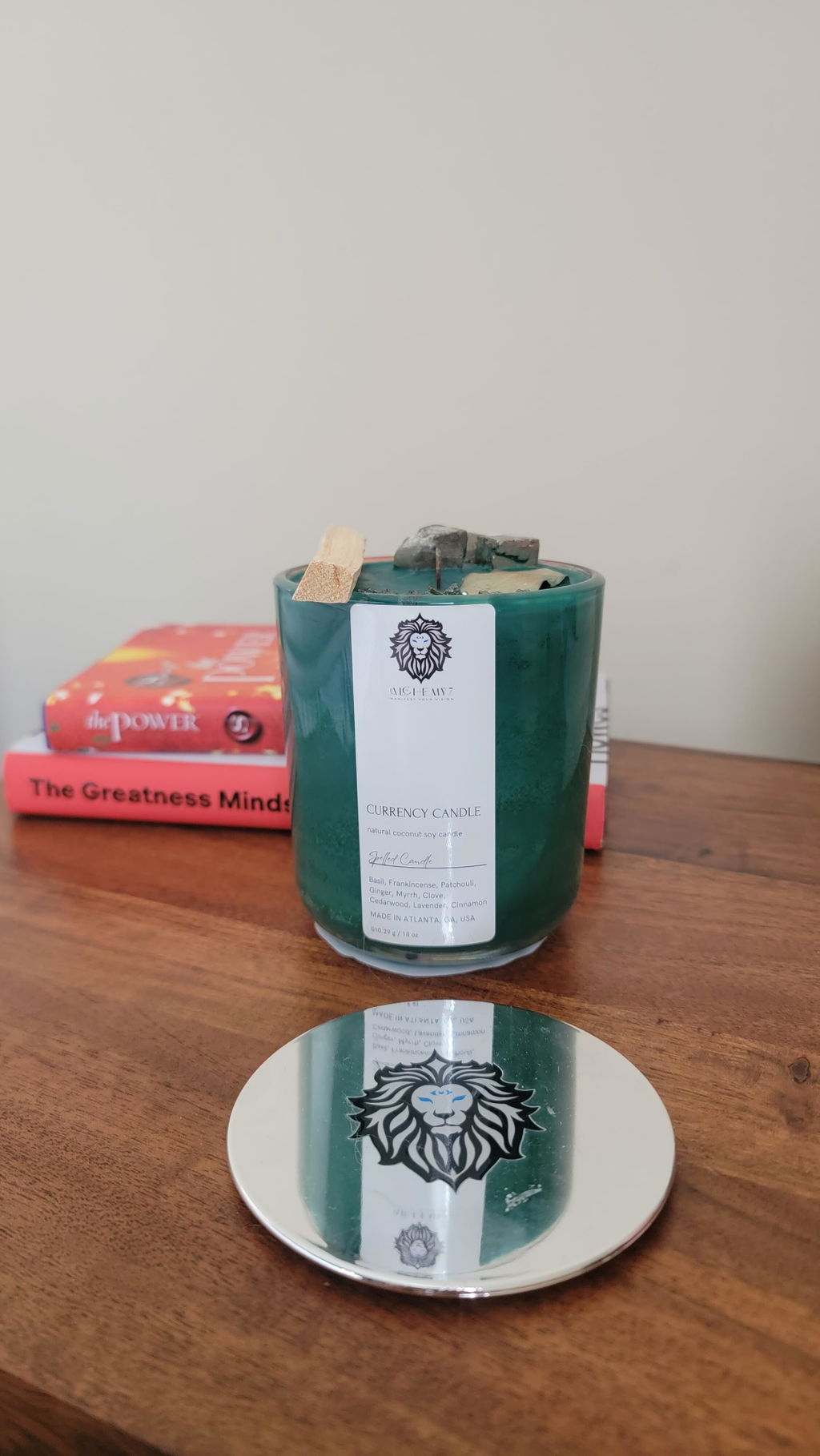
Candle magick was one of the foundations of Haus Of Alchemy, and it remains one of the practices closest to me. What began as fascination with candles, oils and botanicals eventually became curiosity about why every element was there and what role it played in the work.
That curiosity changed the way I practice. I don't want to add something simply because a correspondence chart tells me it belongs there. I want to understand the intention, what I'm actually trying to affect and whether every part of the candle supports that work.
I also don't believe lighting a candle releases me from responsibility for what happens next. Spiritual practice, for me, is participation. If I light a candle for opportunity, I still have to recognize the door when it opens. If I work for protection, I may still need to establish the boundary. The candle gives my intention form, but I still have to participate in the life I'm asking to change.
That's the power of candle magick for me.
It begins with a very simple thought:
Something needs to change. I can do something about it.
And perhaps the next time you light a candle and ask for something of your own, you'll understand why I light mine.
— Ameynra J. Alquemi
Editor at Haus Of Alchemy
12 comments
erznu0
begl25
zpljdj
dxur3c
z2qed9