

Conjure has survived enslavement, religion, migration, misunderstanding and reinvention. Perhaps that is because it was never meant to remain frozen in time.
Being a conjurer means understanding that ordinary materials can become part of your spiritual vocabulary. Over time, you become increasingly fluent in what you are trying to say. It means having knowledge of roots, plants and prayer—and understanding how to work with them with purpose. Some people inherit that knowledge directly, while others find their way to it through the resources available to them. Some are born with spiritual gifts; others are drawn to the practice and discover something there that feels strangely familiar. There is no single path that leads someone to conjure. Perhaps there never could be, because conjure itself has never fit perfectly inside one spiritual box.
That can make conjure difficult to explain to someone expecting a religion with a single doctrine, sacred text or prescribed path to membership. Conjure is a practice. It developed within African American life from spiritual knowledge carried by Africans into America, then changed as the people carrying that knowledge were forced to change. What survived enslavement could not always survive in its original form. People were separated from communities that had once held their knowledge, introduced to Christianity and surrounded by unfamiliar plants. They encountered Indigenous people and European folk traditions. What emerged was not a perfect preservation of what had existed before America. It was a spiritual practice capable of adapting to the reality in which its practitioners actually lived.
That adaptability is one of the things I find most fascinating about conjure. Our ancestors did not have the luxury of treating spirituality as an abstract pursuit. They had lives to live under circumstances that frequently gave them very little control over what happened to those lives. They needed healing. They needed protection. They wanted love, money and opportunity. Sometimes they wanted justice. Sometimes they wanted revenge. Conjure was never required to be pretty in order to be useful, because the people practicing it were human. They worked on the conditions that mattered to them.
And they worked with what they had.
A plant growing nearby could become medicine or spiritual material. Water could cleanse more than the body. A Psalm could be read not simply as scripture but with purpose. Something could be carried for protection, placed in a home or prepared for a particular person. Knowledge accumulated through practice and observation, then moved between families and communities. Sometimes it was deliberately taught. Sometimes children simply grew up watching what the adults around them did and understood long before anyone bothered to give it a name.
That last part interests me because we have become obsessed with labels.
Today, people can spend more time debating whether something is Hoodoo, conjure, rootwork, folk magic or something else than asking what the practitioner standing in front of them actually does. Historical records do not make the problem easier. Black spiritual practices were often documented by outsiders who interpreted what they saw through their own religious beliefs and racial assumptions. Practices they did not understand could become superstition, witchcraft or something sinister simply because those were the words available—or acceptable—to the person holding the pen.
Meanwhile, the practitioners kept practicing.
A woman could attend church and still know what to put in a bath when something didn't feel right. Someone could pray to God while working a root. The Bible could sit beside practices that a modern observer might insist belonged to an entirely different spiritual category. Those combinations seem contradictory only when we assume the people practicing them were obligated to organize their spiritual lives according to the categories we use now.
They weren't.
They were trying to get something done.
🜃 A Living Practice
Conjure did not disappear when the circumstances that created it changed. It moved. Families carried practices from rural communities into cities, knowledge that had once traveled primarily through relatives and neighbors eventually found its way into books, and materials that once had to be gathered locally could suddenly be purchased from across the country. Today, someone curious about conjure can encounter in an afternoon what an earlier practitioner might have spent years learning through proximity. That access has changed the practice, but it has also made an old question newly relevant: if conjure has always adapted to the lives of the people practicing it, what does authenticity look like now?
For some practitioners, the answer is lineage. Their knowledge lives inside family stories, recipes and practices passed between generations. For others, the path begins with study. They read historical accounts, learn the properties of materials, seek teachers when appropriate and build experience through practice. Neither path guarantees wisdom. Inherited knowledge still has to be understood, just as knowledge found in a book still has to become something more than information on a page.
Perhaps that is because conjure has never depended solely on knowing that a particular root, oil or prayer is associated with a particular outcome. The practice asks the practitioner to understand the condition in front of them. Someone asking for money may not need attraction at all; perhaps money arrives easily and disappears just as quickly. Someone asking for love may actually need to address why the same relationship keeps returning under a different name. A person seeking protection may first need to remove what has already been allowed inside. The material matters, but so does the judgment of the person choosing it.
That is where conjure becomes difficult to reduce to correspondence charts and recipes. Knowing what something has traditionally been used for is valuable. Knowing when to use it, what to combine it with and when to leave it alone is something else entirely. The difference is practice.

Modern conjure also exists in a world where spiritual traditions that once developed at great distances from one another can now appear beside each other on the same screen. That creates extraordinary opportunities to learn, but it also makes discernment more important. Access is not the same thing as understanding, and admiration does not automatically create belonging. A living tradition can evolve without becoming a collection of everything a practitioner finds spiritually interesting.
Yet evolution is inevitable. The people practicing conjure today do not live in the nineteenth century, nor should they pretend to. New generations bring different knowledge to the practice. They encounter new materials and new ways of understanding old ones. They ask different questions because their lives present different problems. What connects them to the people who practiced before them is not necessarily an identical collection of objects or an unchanging set of instructions. It is the continuing belief that spiritual intention can be given physical form—and that when something in life needs to move, there may be something we can do to participate in moving it.
Conjure survived because it was useful enough to keep.
And perhaps the clearest evidence that it is still alive is that people are still asking the same fundamental question, even when the circumstances surrounding it have changed:
What can I do about this?
 🜔 As for Me
I am a conjurer.
This is where conjure becomes more than history for me. If it survived because people adapted it to the world around them, what should it look like in the hands of someone practicing it now?
I don't live in the world my ancestors lived in. I have access to information they did not have, just as they possessed knowledge I will probably never recover. I can research a plant before I ever touch it. I can study spiritual traditions from another continent without leaving my home. I can compare historical sources, learn different methods and discover materials that would have been impossible for an earlier practitioner to obtain. That access can make a modern spiritual practice extraordinarily rich. It can also turn it into a mess.
Everything that is spiritual does not belong together simply because we like it.
That is where discernment enters my practice. Learning about something does not automatically mean I need to adopt it. Finding something beautiful does not make it mine. At the same time, I don't believe respecting tradition requires pretending spiritual practices stopped evolving at some arbitrary point in history. I can understand where something came from without believing I must reproduce another person's practice exactly.
This is also why I have become less interested in memorizing what an ingredient is “for” and more interested in understanding what I am actually asking it to do.
If I am creating something for abundance, throwing every ingredient associated with money into it doesn't make the work stronger. What is the condition? Do I need to attract something, or is something blocking movement? Am I trying to open an opportunity? Am I trying to keep what has already arrived? Those are not necessarily the same work.
The same thinking applies elsewhere. Cleansing and protection are related, but they aren't identical. Attraction is not the same thing as love. Releasing something is different from healing what it left behind. Sometimes the work I thought I needed isn't the work I need at all.
That is the part of conjure I love.
The thinking.
There is an enormous difference between knowing that a plant has historically been associated with a particular purpose and knowing why you chose that plant for this work. The first can be learned from a book. The second develops through practice.
Eventually, the materials begin speaking a language you understand.
A candle stops being simply wax with herbs sprinkled across the top. A spiritual bath is no longer just fragrant water. Florida Water isn't simply something that smells familiar. A petition isn't a wish written on paper. Each becomes a way of giving form to something that would otherwise exist only as thought, desire or intention.
That idea sits at the center of Haus Of Alchemy.
When I formulate something for the Haus, I am not asking only whether the ingredients smell good together or whether the finished product will look beautiful. Of course those things matter; this is still Haus Of Alchemy. But beauty cannot be the only reason something is there.
I want to know its job.
Why is this botanical in this formulation? Why this oil? What changes when these materials are combined? Does the purpose of the work require clearing before attraction? Would timing add something meaningful, or would I simply be decorating the work with astrology because a moon phase sounds impressive on a product page?
Sometimes the answer is that an ingredient I love doesn't belong there.
So I leave it out.
That may not sound particularly mystical, but to me it is part of the discipline of conjure. More does not automatically mean more powerful. A formulation should make sense. The person using it should be able to understand why it exists, even if they never know every decision that went into creating it.
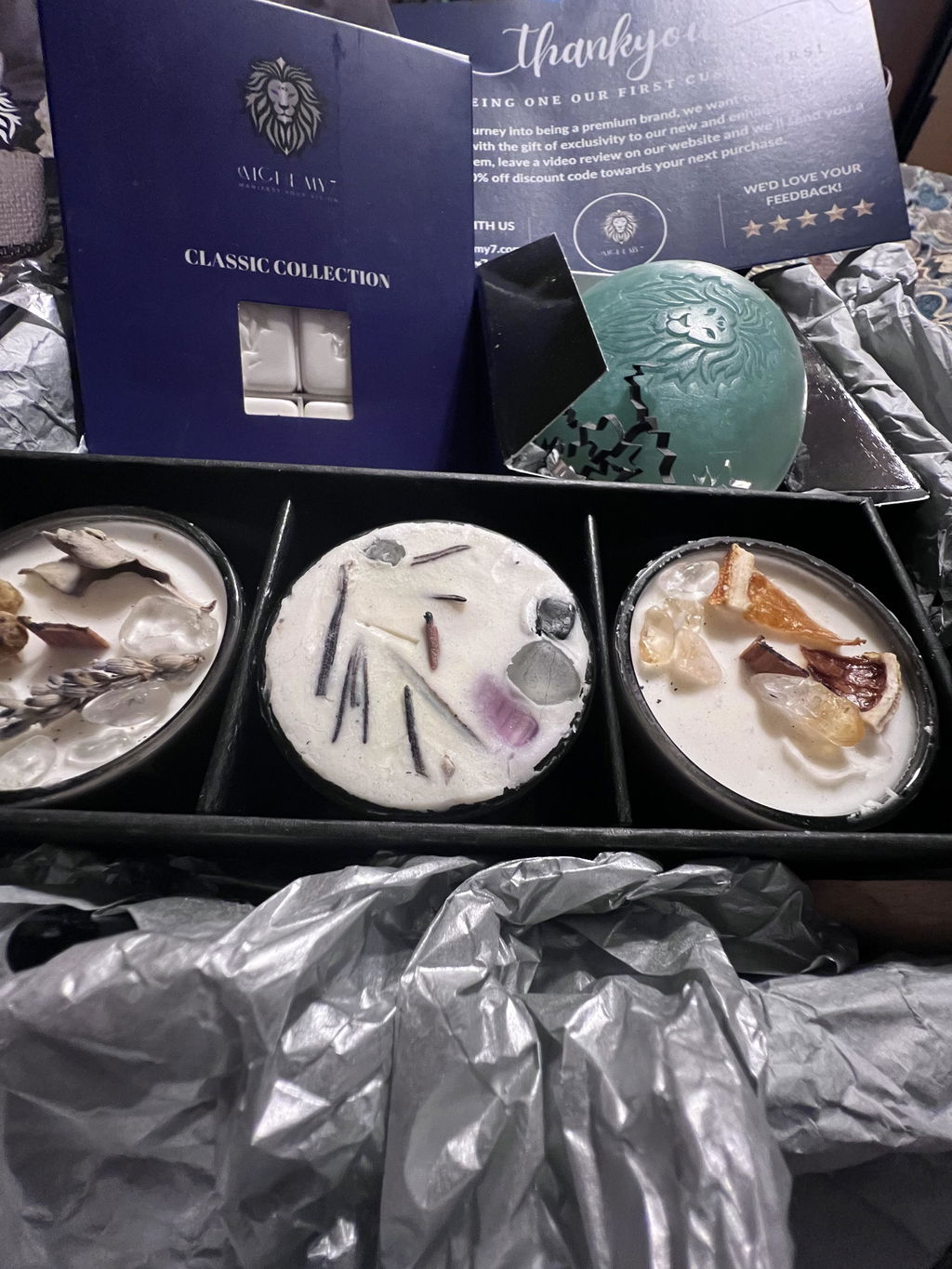
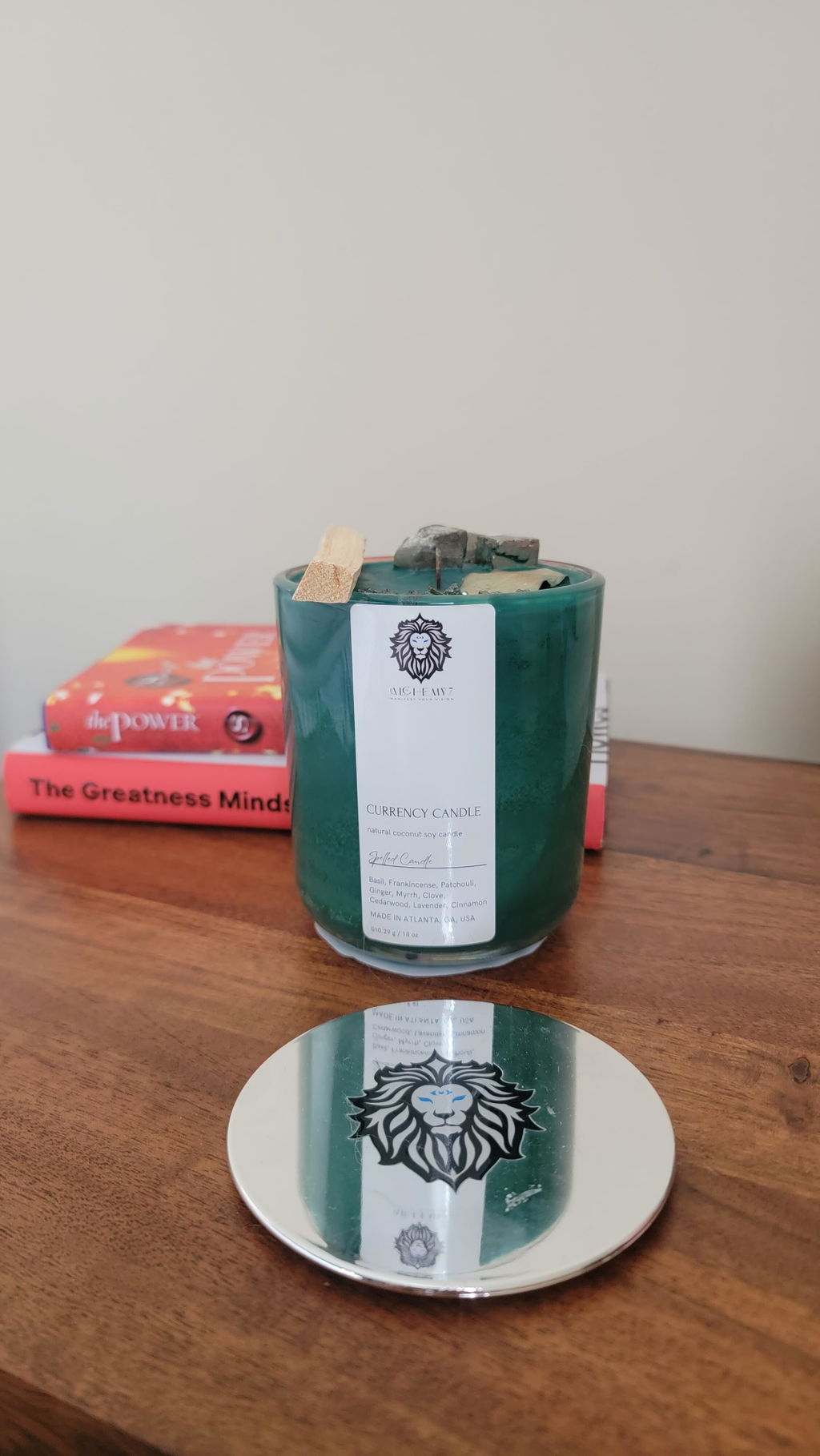
And this is where Haus Of Alchemy becomes inseparable from my own spiritual evolution. The deeper I went into conjure, the harder it became for me to create products simply because spiritual consumers were accustomed to buying them. I wanted to understand the practice behind the product. If I was going to create a spiritual bath, I needed to think about what a bath was being asked to accomplish. If I was going to formulate an oil, I wanted each component to have a reason for being there. If I was going to cast a candle for a particular purpose, then the work surrounding that candle mattered as much to me as the wax someone eventually saw.
The customer doesn't have to be a conjurer to use something created by one.
In fact, that distinction matters to me. I don't want someone to believe she needs years of study before she can intentionally cleanse her home, take a spiritual bath or light a candle while asking for change. Conjure has never interested me because it makes spirituality inaccessible. Quite the opposite. There is something remarkably intimate about taking an ordinary object and giving it purpose.
Most of us already understand that instinct.
We keep something that belonged to a person we love because somehow it feels as though part of them remains with it. We clean the house after an argument because opening the windows and changing the room feels necessary. We take a bath after a terrible day and know we're trying to wash off something water cannot technically remove. We light candles when we pray, celebrate, mourn and remember.
Conjure takes seriously the possibility that physical actions can participate in spiritual intention.
You don't have to believe everything I believe to understand why that idea has survived.
— Ameynra J. Alquemi
Founder, Haus Of Alchemy
Manifest your vision.