

The ancient energy system behind one of modern spirituality’s most familiar ideas.
You can know exactly what you want to say and still find yourself unable to say it. You can be surrounded by people who love you and have difficulty receiving that love. You can have money in the bank and still feel profoundly unsafe. You can be creative your entire life and suddenly reach for that part of yourself only to discover that nothing seems to come.
Most of us recognize these experiences long before we ever learn the words root chakra, heart chakra or throat chakra. We simply know that something feels off. Something that once moved easily doesn't. Something we intellectually understand hasn't quite made its way into the rest of us.
Modern spirituality often gives that experience a simple diagnosis: your chakra is blocked.
Maybe. But before we begin diagnosing ourselves through a rainbow-colored chart, it helps to understand what chakras actually are, where the idea comes from and what this ancient spiritual framework may—and may not—be able to tell us about ourselves.
Before Chakras Became a Rainbow
The word chakra comes from Sanskrit and is commonly translated as wheel or disc. Chakra concepts developed within Indian religious and philosophical traditions over many centuries, particularly within Hindu and Buddhist tantric traditions. They were part of complex systems concerned with the subtle body, consciousness, breath, spiritual practice and the movement of vital energy—not originally a seven-color wellness chart hanging on the wall of a yoga studio.
That distinction matters.
The version most familiar in contemporary Western spirituality usually describes seven major chakras positioned along the central axis of the body: the Root at the base of the spine, the Sacral below the navel, the Solar Plexus around the upper abdomen, the Heart at the center of the chest, the Throat, the Third Eye between the brows and the Crown at the top of the head. We commonly associate them with grounding and security, creativity and sexuality, personal power, love, communication, intuition and spiritual connection.
But chakra traditions have never been quite as standardized as modern diagrams can make them appear. Historical traditions described different numbers and arrangements of chakras, and many of the color associations and psychological interpretations that feel inseparable from chakra work today were shaped and standardized through later interpretations, particularly as Eastern spiritual ideas traveled through Western esoteric and New Age movements.
That doesn't make the modern seven-chakra system useless. Spiritual traditions evolve as people carry them across centuries, languages and cultures. But understanding that evolution keeps us from confusing a contemporary interpretation with the entirety of an ancient tradition.
And perhaps it gives us permission to approach chakra work with curiosity rather than treating every chart we encounter as an instruction manual for the human soul.
What Does a “Blocked Chakra” Actually Mean?
This is where chakra work becomes interesting to me.
When people say a chakra is blocked, they are generally describing an area in which energy is believed to be restricted, imbalanced or unable to move as it should. In contemporary chakra practice, that energetic disruption is often connected with patterns occurring elsewhere in a person's life.
The Root is commonly associated with security, stability and grounding. The Sacral with creativity, pleasure, sexuality and emotional movement. The Solar Plexus with confidence, agency and personal power. The Heart with love, compassion and our capacity to give and receive connection. The Throat with communication and expression. The Third Eye with intuition and perception. The Crown with spiritual connection and consciousness.

Seen this way, the chakra system can become more than a list of colors and meanings. It can become a framework for asking questions.
If I constantly struggle to say what I mean, what happens when I explore that through the symbolism of the Throat Chakra? If I have difficulty establishing boundaries or trusting my own decisions, what might Solar Plexus work bring to my attention? If I am moving through life feeling chronically unsafe, disconnected or untethered, what might the Root Chakra give me language to examine?
The danger comes when reflection becomes diagnosis.
A period of financial instability isn't proof that your Root Chakra caused your financial problems. Difficulty expressing yourself may involve fear, past experiences, relationships, environment or circumstances that cannot be reduced to an energetic blockage. Physical symptoms deserve appropriate medical attention rather than being automatically attributed to chakra imbalance. Emotional distress may have psychological, relational or practical causes that require their own forms of care.
Spiritual practice doesn't become less meaningful because other explanations exist.
In fact, I think it becomes more useful when we allow several things to be true at once.
You may work with your Root Chakra while also creating a budget. You may meditate on the Throat Chakra while preparing yourself to have the conversation you've been avoiding. You may work intentionally with the Heart Chakra while also examining why you continue accepting relationships that hurt you. You can engage the spiritual dimension of an experience without surrendering your responsibility for what is happening in the physical one.
That is the part of chakra work that interests me most. Not the promise that we can keep all seven energy centers perfectly aligned at all times, but the possibility that they can help us notice ourselves differently.
Alignment Is Not the Same as Perfection
Once you begin thinking about chakras this way, “balancing” them starts to mean something different.
There are many practices people use in contemporary chakra work: meditation, breathwork, yoga, visualization, sound, prayer, journaling, candles, crystals and other spiritual tools. Some people work through the chakras individually. Others incorporate them into a broader spiritual practice. There isn't one universal method that every tradition—or every practitioner—uses.
The tool matters less than what you are actually doing with it.
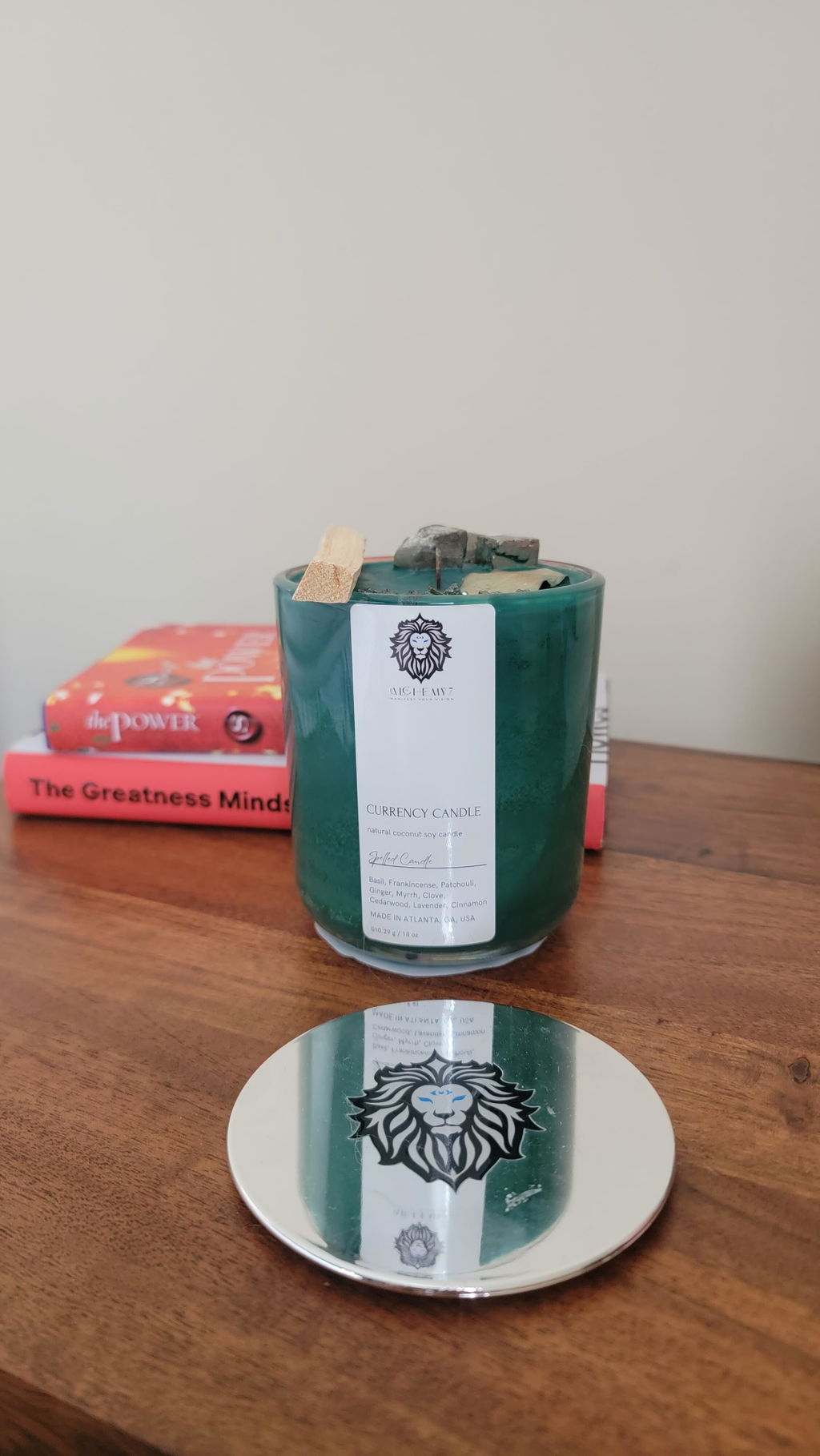
If you light a blue candle while working with communication but continue silencing yourself everywhere that it matters, what exactly are you asking the candle to do for you? If you meditate on abundance and personal power but repeatedly refuse opportunities because fear makes every possibility feel dangerous, perhaps the spiritual work is not failing. Perhaps it is showing you where the practical work begins.
This is something we return to often at Haus Of Alchemy: spiritual practice is participation.
A ritual can create a moment in which you become intentional. Meditation can help you become quiet enough to observe what you've been avoiding. Symbolism can give form to something you haven't known how to name. A spiritual tool can become an anchor for the work you have decided to do.
But eventually, you still have to participate in your own life.
And maybe that is a more useful way to understand chakra alignment. Not as a permanent state in which every part of you is perfectly open, healed and flowing, but as an ongoing practice of noticing where you feel connected, where you feel restricted and what—spiritually, emotionally or practically—may need your attention.
Because we change. Our relationships change. Our environments change. We experience loss, love, fear, opportunity, disappointment, desire and uncertainty. It would be strange to expect our inner lives to remain perfectly balanced while everything around us continues moving.
Perhaps awareness is the practice.

As for Me
I don't always experience something happening in my life and immediately recognize it as, My chakra is blocked.Honestly, I didn't recognize it that way for a long time. Chakra awareness is a skill I'm still developing.
Usually, I recognize the experience first. Something feels different. I may notice what I'm feeling emotionally, what is happening around me or where something in my life doesn't seem to be moving the way it normally does. Considering whether there may also be an energetic component is something I've had to learn to do.
And I think there is value in learning it that way.
I don't want every difficult day to become a spiritual diagnosis. I don't want every problem to mean one of my chakras must be blocked. I'm learning to pay attention to my own energy and recognize my patterns—what balance feels like for me, what disruption feels like and whether I can eventually become aware of those changes earlier.
That's very different from memorizing seven colors and deciding I understand my energetic system.
I'm learning.
The more I develop that awareness, the more chakra work becomes another language through which I can examine myself. Sometimes that language may point toward spiritual work. Sometimes what I discover may require something very practical from me. And sometimes I may simply realize that I need to sit with what I'm experiencing long enough to understand it before deciding what it means.
For me, that is where chakra work becomes useful.
Not in becoming perfectly aligned, but in becoming more aware.
— Ameynra J. Alquemi
Founder, Haus Of Alchemy
Manifest your vision.